
Johnson Street Green Infrastructure Retrofit
PICP Eliminates Flooding In City Intersection While Improving Water Quality Of Local River
Every Project Starts with a Purpose
The Crash Pad is a Chattanooga hostel popular with adventure travelers drawn to the area’s outdoor activities and access to the Tennessee River. But the intersection outside the hotel at Johnson and Passenger streets routinely flooded due to the lack of a stormwater drainage system. During heavy rain, the streets filled with ankle-deep water, damaging pavement and creating ongoing safety and access issues.
“The whole intersection would get covered, and the pavement suffered a lot because of that as well,” said Mark Heinzer, engineering manager for drainage and flood control for the City of Chattanooga.
When property owners Dan Rose and Max Poppel began developing a neighboring parcel for the Flying Squirrel restaurant and bar, they approached the city with a partnership proposal. Their goal was to eliminate the flooding, address long-standing structural issues at the intersection, and comply with the city’s stormwater requirements for new construction.
Like many older cities, Chattanooga operates a combined sewer and stormwater system originally designed decades ago. While effective under normal conditions, heavy rainfall can overwhelm treatment capacity, leading to overflow of untreated sewage into the Tennessee River—a key recreational resource and drinking water supply for communities throughout the Southeast.
To address these challenges and comply with Environmental Protection Agency mandates, the City of Chattanooga implemented several stormwater management programs. One such requirement mandates that all new development or redevelopment capture the first inch of rainfall on site, preventing runoff from entering the combined sewer system.
The Solution
Solving for Style, Function, and Durability
Instead of spending hundreds of thousands of dollars on pipes, storage tanks and other stormwater abatement measures, property owners Dan Rose and Max Poppel proposed a public-private partnership with the City of Chattanooga. They offered to front the cost of permeable interlocking concrete pavers (PICP) if the city would install the system and resurface Johnson Street.
“The original proposal was to do just the intersection. We got them to consider doing the whole block,” Poppel said to the Times Free Press. “The amount we spent on the pavers roughly corresponded to the amount of street improvements we were going to have to do anyway.”
This proposal created a unique opportunity for the city. “We were going to need to replace those roads anyway,” said Mark Heinzer. “So, the opportunity presented itself to do more than just pave them; we were able to include some stormwater improvements as well.”
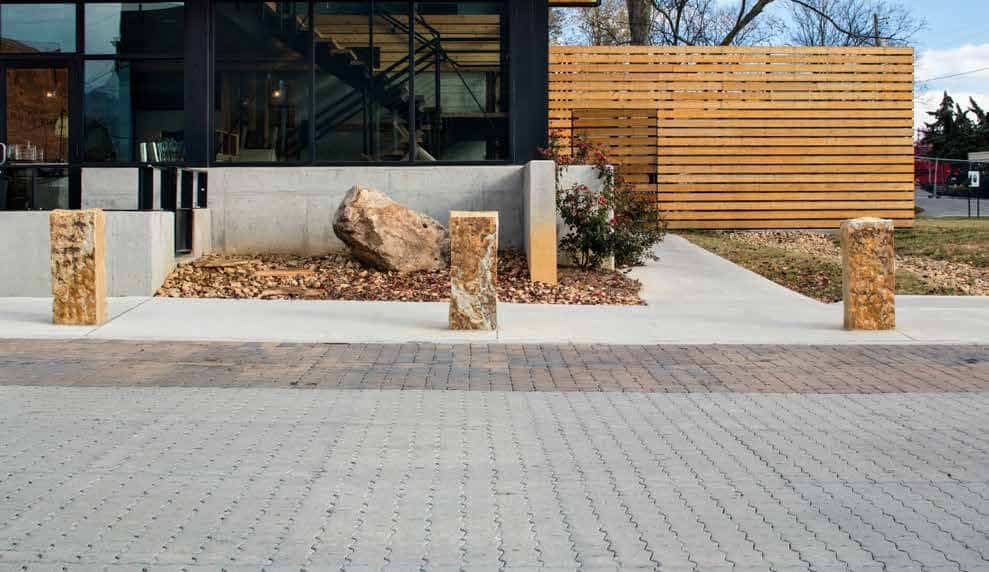
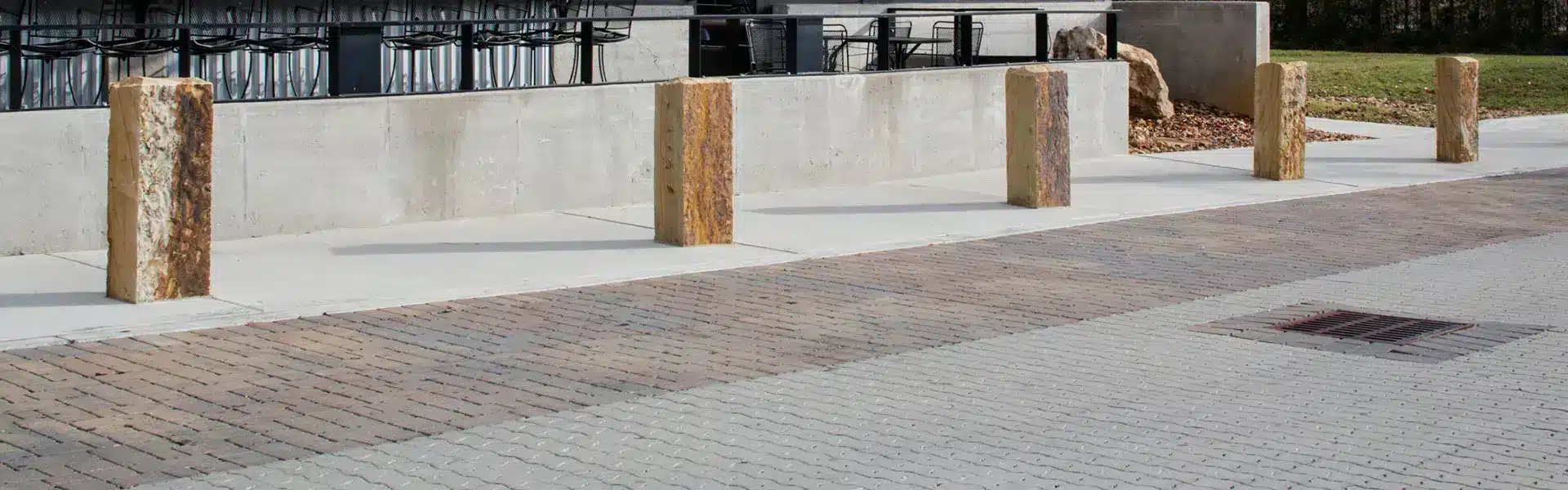
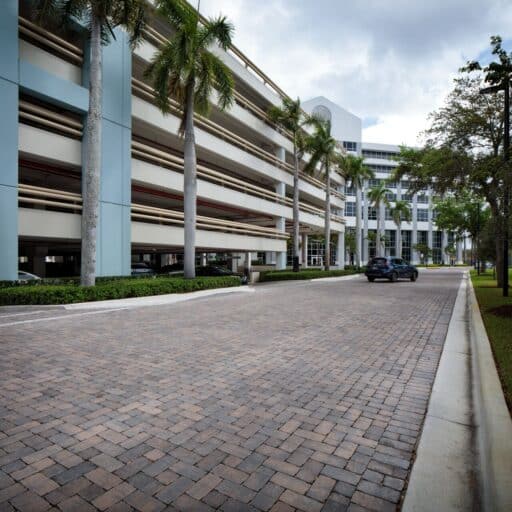
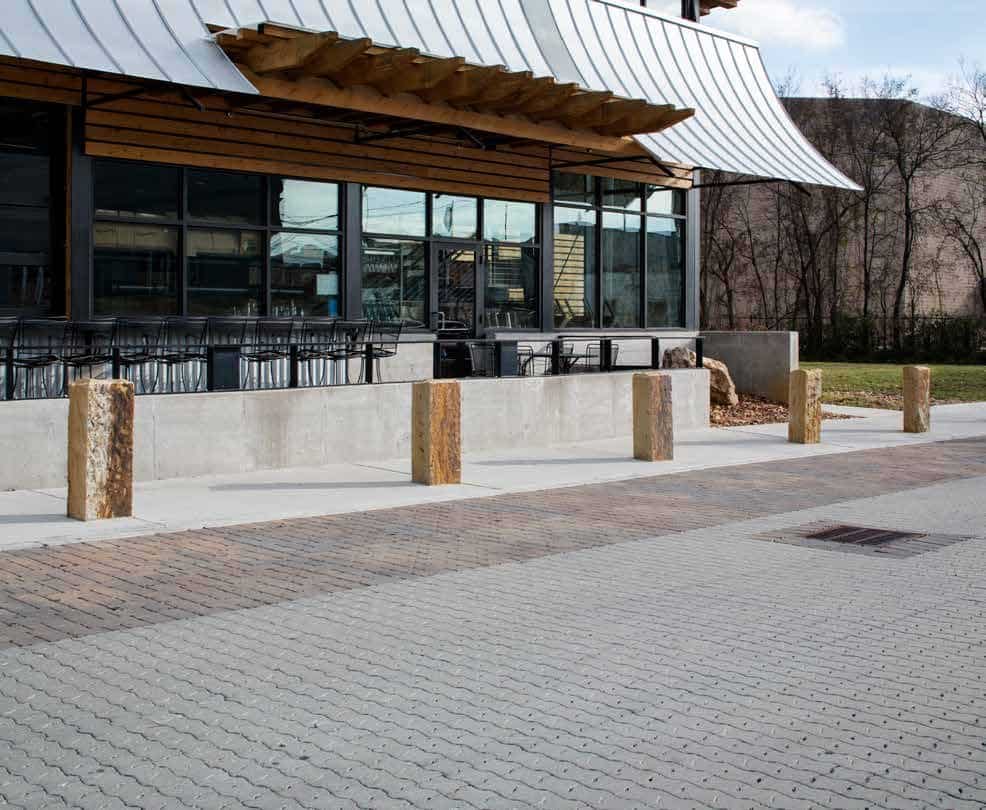
The Johnson Street Green Infrastructure Retrofit Project included construction of 28,000 square feet of roadway using permeable interlocking concrete pavement. Belgard Aqua-Bricloc® pavers were used for the primary roadway, creating a serpentine cobbled pattern capable of supporting heavy vehicular loads, while parking shoulders were constructed with Aqua-Bric® pavers in a herringbone pattern.
During excavation, portions of existing fill containing industrial contamination were removed. The remaining soils were scarified rather than compacted to improve infiltration. An underdrain system was installed between the soil and aggregate layers and connected to the combined sewer system. The graduated aggregate base provides up to six inches of stormwater storage before water enters the underdrain. “It slows down that peak rate for the combined sewer system,” Heinzer said, reducing the potential for overflow.
Featured Products

The Result
A Lasting Impression:
The Final Transformation
The finished permeable paver street, built over a three-foot gravel reservoir, now captures all of the intersection’s excess rainwater, keeping approximately 11,000 cubic feet of runoff out of the combined sewer system.
“There have been zero problems with rainwater,” said Mark Heinzer. “It doesn’t stand in the roadway at all. The water goes right through the surface of the pavement and gets underground and is held there. We’ve had absolutely no problems since the project with any kind of flooding.”
Although the system continues to function properly, the city plans to perform preventative maintenance to keep it operating at optimal levels. “It’s got such a redundancy in its capacity that it’s still working fine,” Heinzer said. As a precaution, the city will periodically use a sweeper and vacuum truck to remove fines that could clog the joints, then refill them with aggregate chips every two to three years, as needed.
Property owners Rose and Poppel received the Tennessee Governor’s Environmental Stewardship Award in 2014 for excellence in green building for their work on the Flying Squirrel, the Johnston Street Project, and the adjacent Crash Pad hostel, which achieved LEED Platinum certification in 2012 on a brownfield site.
Due to the success of this and similar projects totaling more than 100,000 square feet of PICP citywide, Chattanooga has formally endorsed permeable interlocking concrete pavement as a low-impact development solution. As an incentive, the city plans to establish one of the nation’s first stormwater markets, allowing property owners who replace asphalt with PICP to earn and trade stormwater credits.






PLAN + DESIGN
Smarter Planning. Better Design.
Belgard isn’t just here to provide the product—we’re your partner in planning and design. From first ideas to final layout, we make it easy to bring your outdoor vision to life.


Outdoor Living Awaits
Let’s build something beautiful together
Outdoor living solutions for homeowners, contractors, and designers.
We’ll listen to your needs, help identify the right products and design approach, and guide you toward a tailored solution that brings your outdoor vision to life.