
- Driveways
- |
- Outdoor Living
- |
- Patios
- |
- Pool Decks
- |
- Walkways
Paver Border & Edging Options for Outdoor Spaces
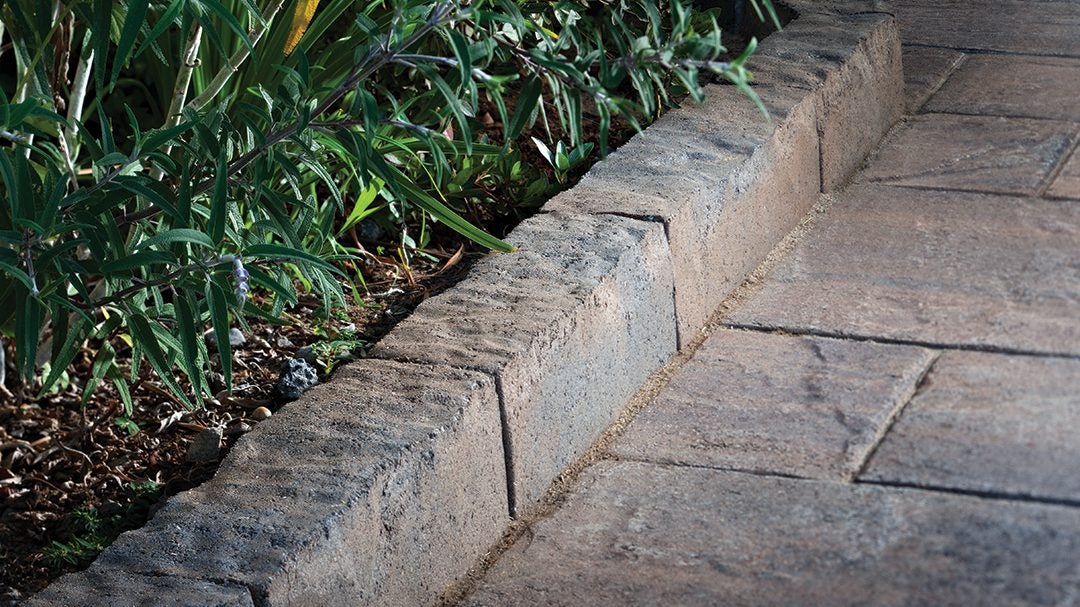
Planning the perfect outdoor living space involves making lots of choices. While the border of your paver patio, driveway or walkway may seem like a small detail, there are several options to consider, each with its own pros and cons.
When planning your patio, consult with your Belgard Authorized Contractor and this guide to choose the right paver edging and border option for your outdoor living space.
Paver Edge Restraints
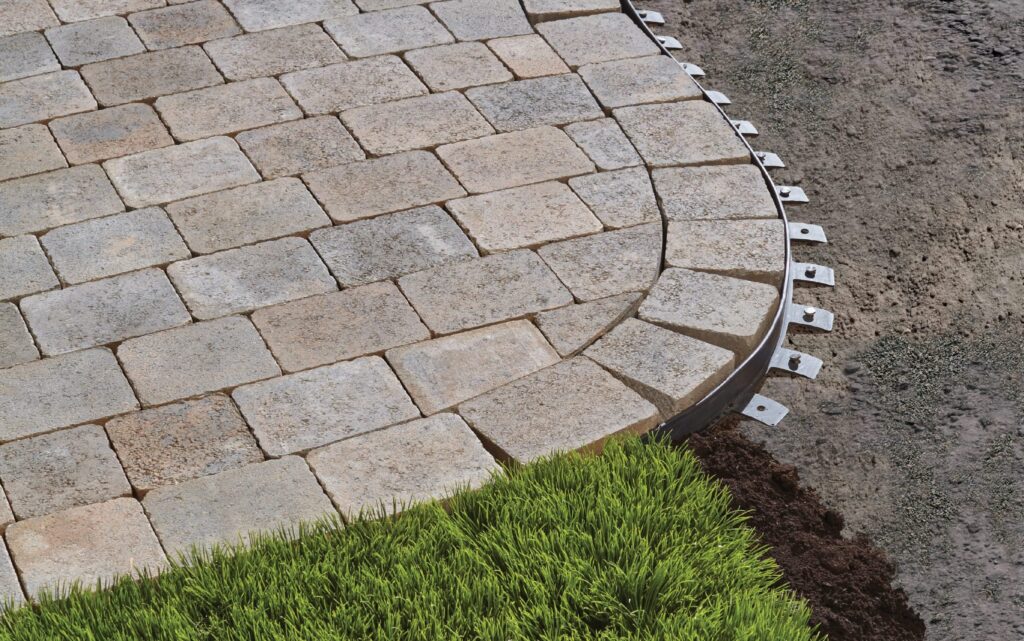
No matter which border option is chosen, the paver field should be secured with paver edge restraints. Techniseal® offers rigid paver edging in 8-foot sections or coil edging in 40-foot rolls that can both be cut as needed during installation to fit the paver field.
For curves, restraints can be snipped at the top if needed for additional flexibility. Galvanized spikes hold the restraints in place, securing pavers to prevent future movement. Once sand and sod have been added, the restraints are hidden underground to create a nice clean look.
In the case of a stepping-stone design, restraints are not necessary unless each “step” in the design includes multiple pavers. Pavers that abut a wall or concrete slab do not require edge restraints on the abutment side.
Inlay Borders
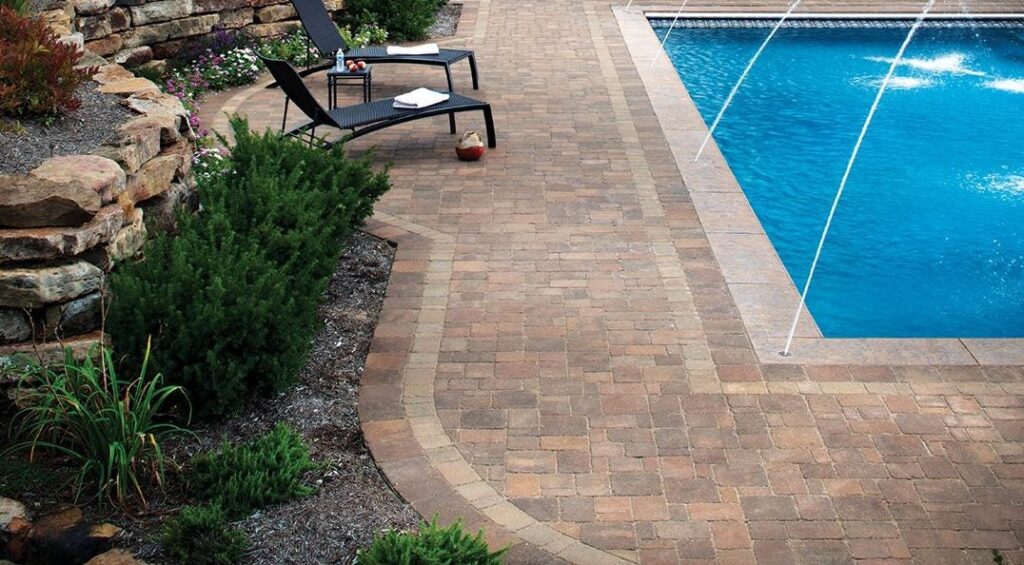
An inlay is a border style created by using a Belgard paver of a different color or texture to create a visual delineation either around or within your paved area. Inlays can be used to create a border along the edge and can also be used to highlight intricate designs within larger areas, such as a faux paver rug design. Inlays are a great way to add visual interest to your patio without incorporating another feature.
Edge Pavers and Curb Stones
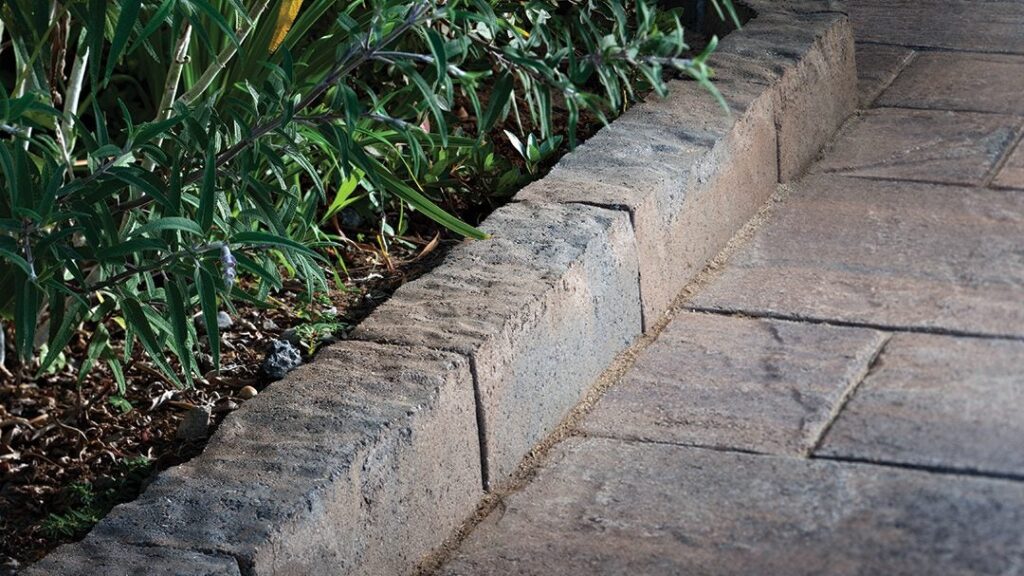
The Anglia Edger®is one option that is designed specifically for use as a bordering paver. This paver edge restraint can be used to enhance the curb appeal of your home and finish your walkway, driveway or flowerbed borders with a decorative border. Other edging pavers and curb stones are regionally available.
Poured or Troweled Concrete Curbing
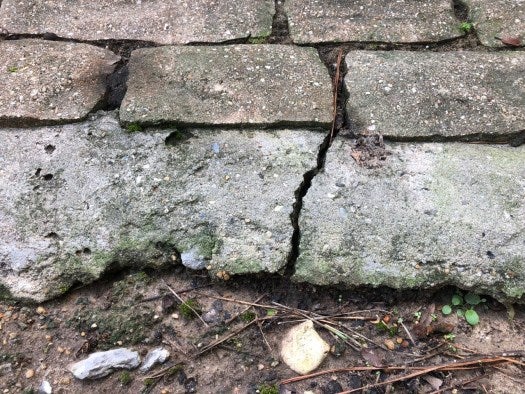
According to the homeowner, this hand-troweled concrete curbing began to decay and crack only a couple of years after installation. 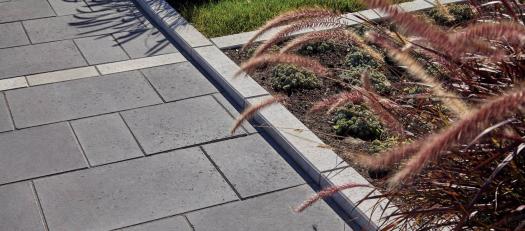
A better curbing option would be to use curb pavers.
Some contractors hold pavers in place with either poured or hand-troweled concrete curbing, however this practice is not ideal. Although acceptable by ICPI standards, it is not recommended in northern climates.
This type of concrete curbing can also be an unwise choice for moist climates or areas with expanding clays. Over time, the concrete edging can crack or chip away, detracting from the look and reducing the stability of the paver field.
For those who like the clean look of a poured concrete edge, the better option would be to use manufactured concrete edgers like Melville™ Curb, which have a higher strength and are designed for this specific purpose. Manufactured paver edgers and curbs should be held in place with standard paver edge restraints, like any other paver border.
Freestanding Walls
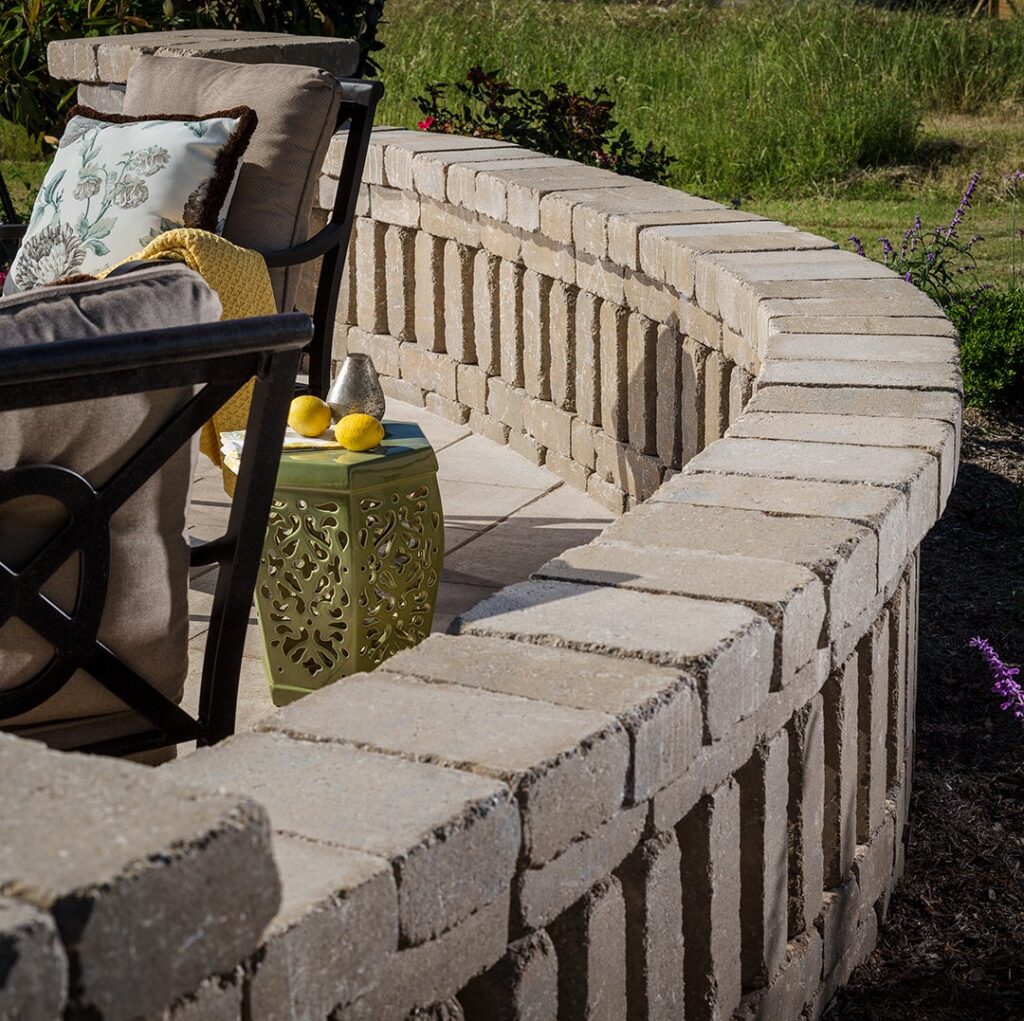
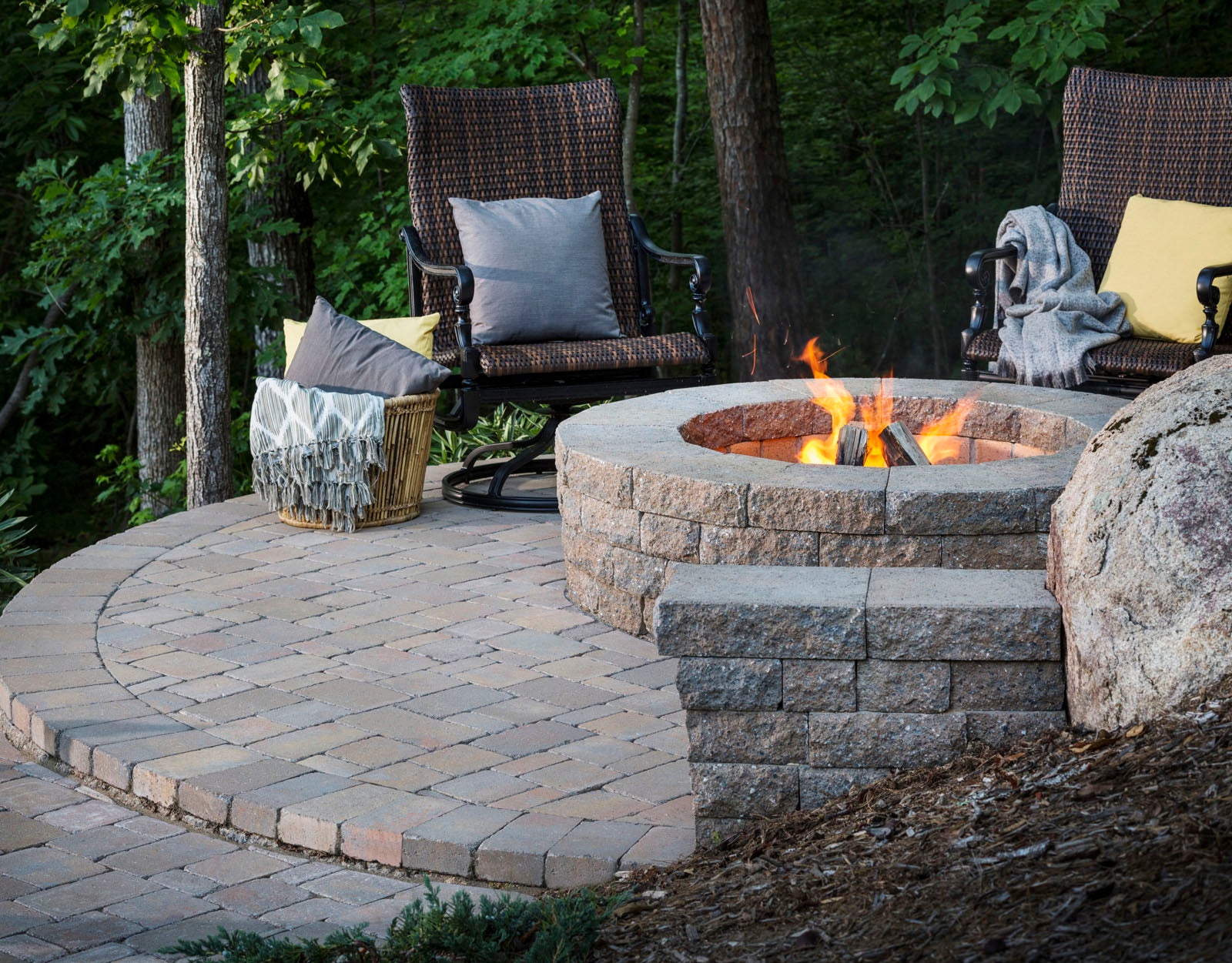
Belgard freestanding walls are a decorative and functional element that can be incorporated into almost any hardscape design. They create a beautiful border for a patio, help define the space and can often be used as an integrated seating area. Belgard offers a number of freestanding wall options to match your style giving you almost limitless design possibilities.
Securing Steps
There are various options for forming steps at the edge of a paver field. Retaining wall block provides an excellent option for this, as it is designed to hold the earth back and provide stability. In addition, the coordinating retaining wall cap units are designed to provide a finished look with an aesthetically pleasing exposed edge.
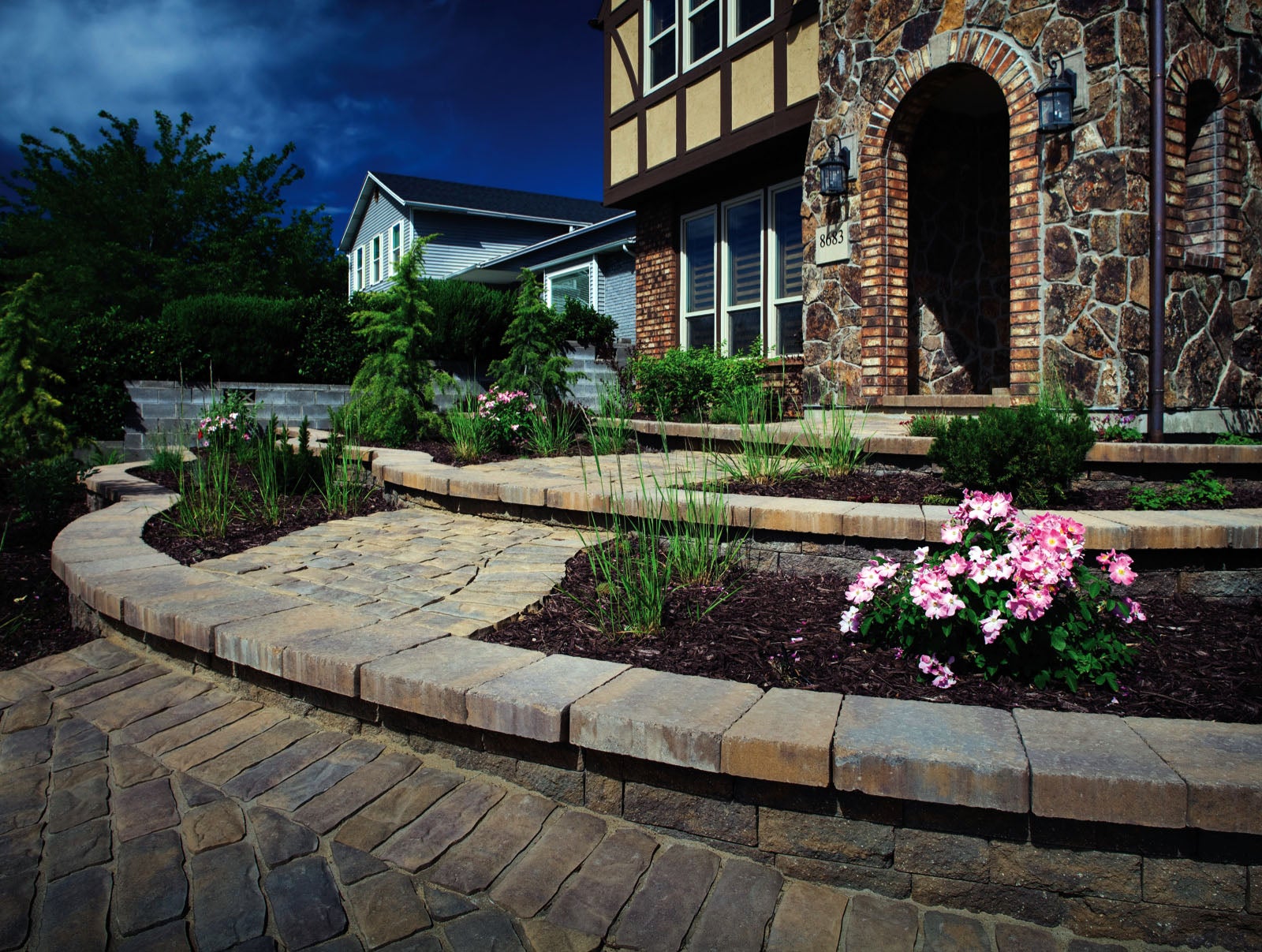
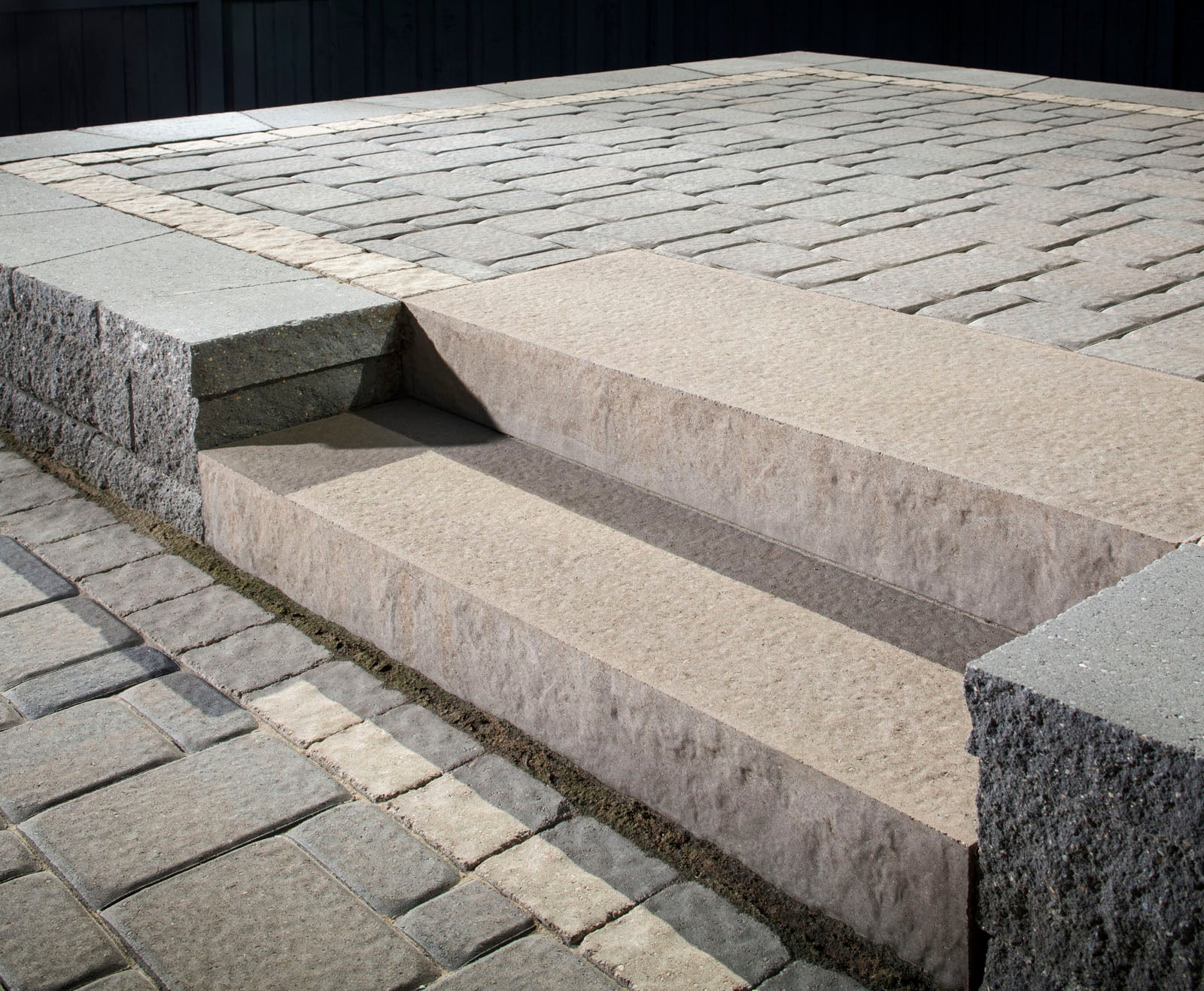
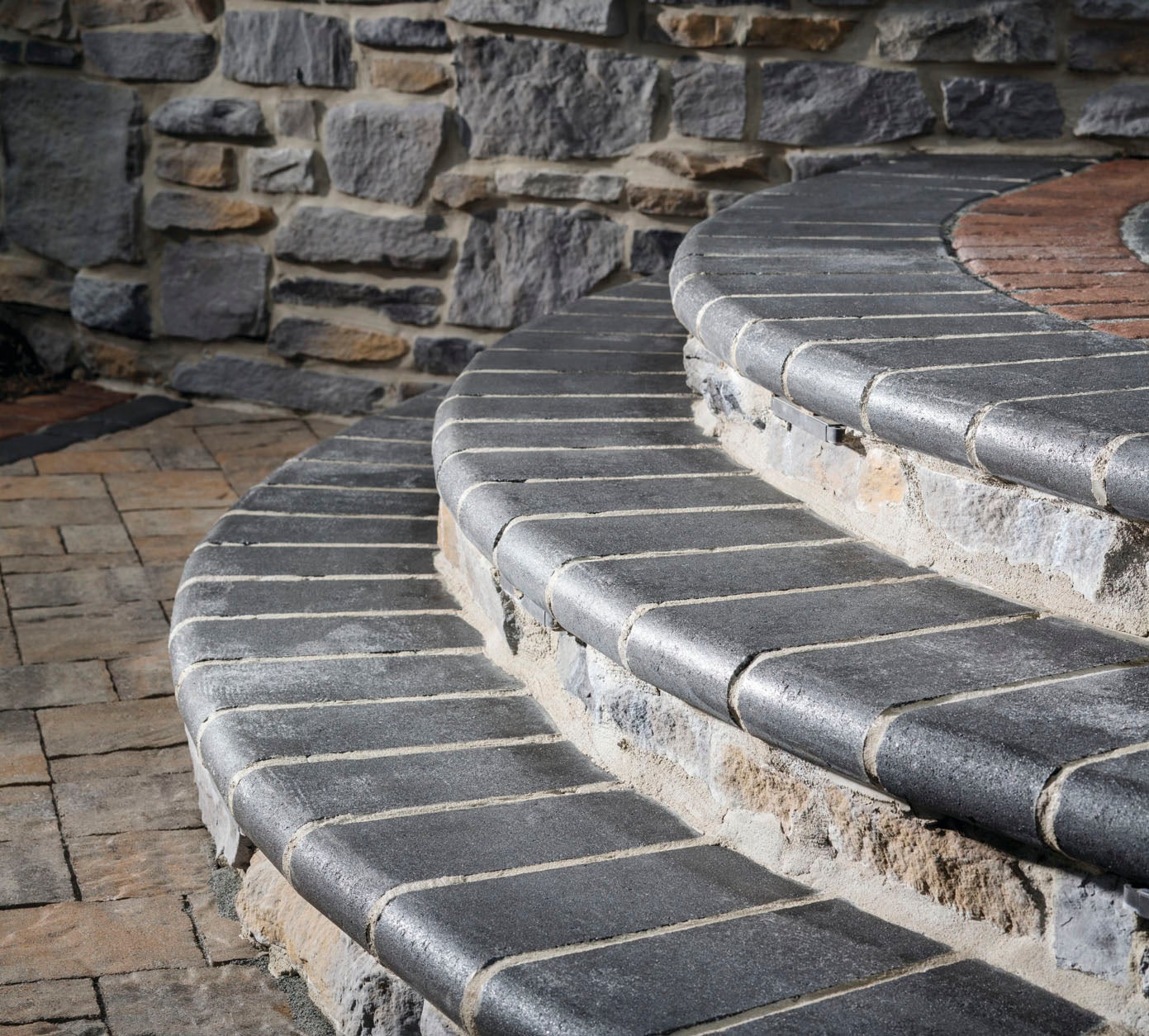
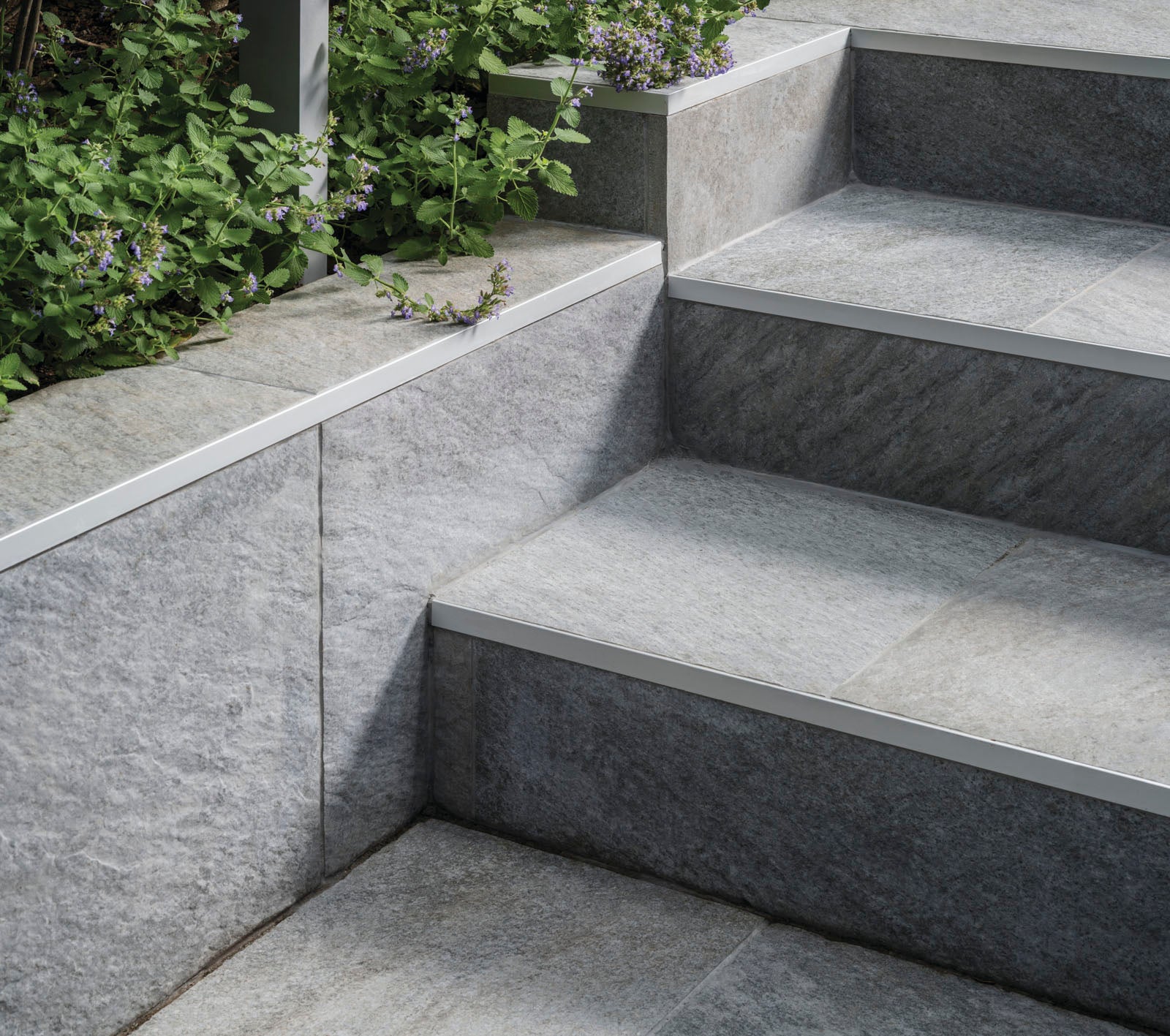
Bullnose coping is also an excellent option for step edging and provides a clean look that can be used to coordinate with planters and pool coping. However, most coping units are lightweight and should be secured in place with mortar or masonry adhesives to provide stability. For a more uniform look, the pavers used for the paver field can also be used to edge the steps but will also require mortar or adhesive for stability.
Heavier materials like wall cap units, paver step units or large natural stone slabs will be heavy enough to stay in place without requiring additional reinforcement. When using porcelain pavers to form steps, framework and adhesive will be required.
Stepables Ground Covering
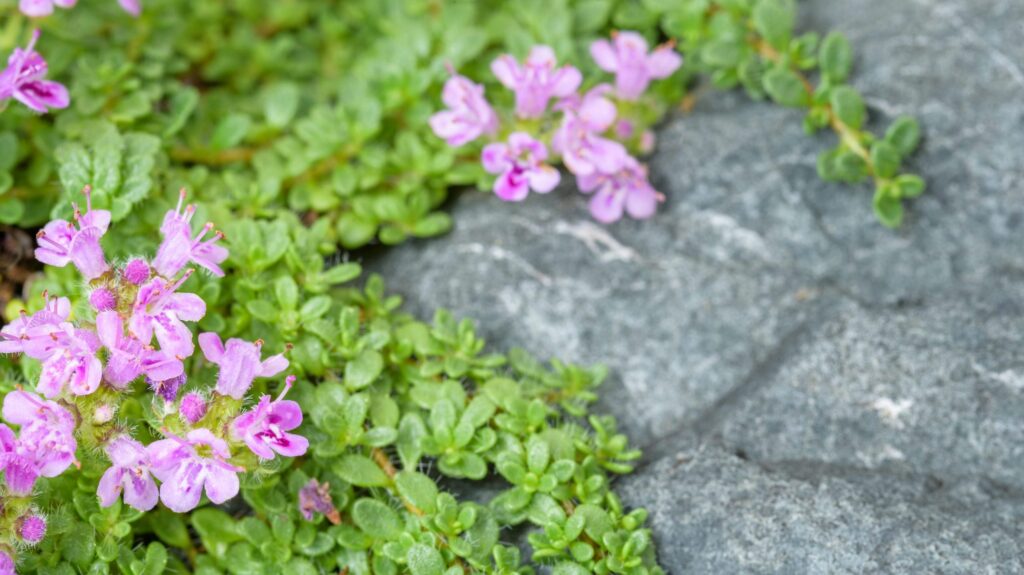
If you want a more natural look for your hardscape patio border, consider planting stepables, which are creeping perennials that create beautiful borders around your patio while controlling weeds. Stepables are plants that are hardy enough to be walked over while providing ground cover for any kind of terrain.
Entangled Pavers
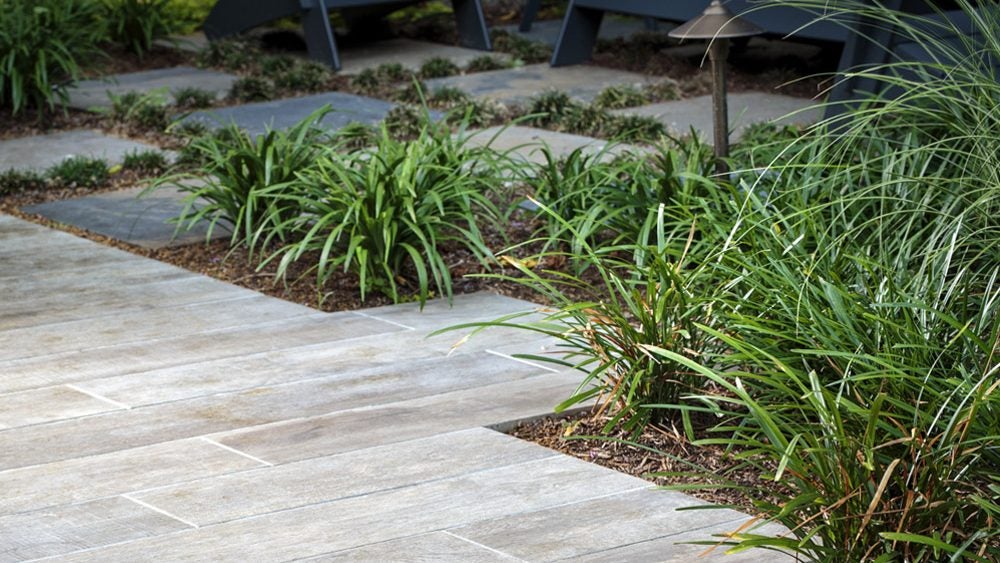
A rising trend in paver design is to entangle the edge of the paver with either artificial turf or the natural landscape. When taking the entangled approach, proper edge restraints are still required.